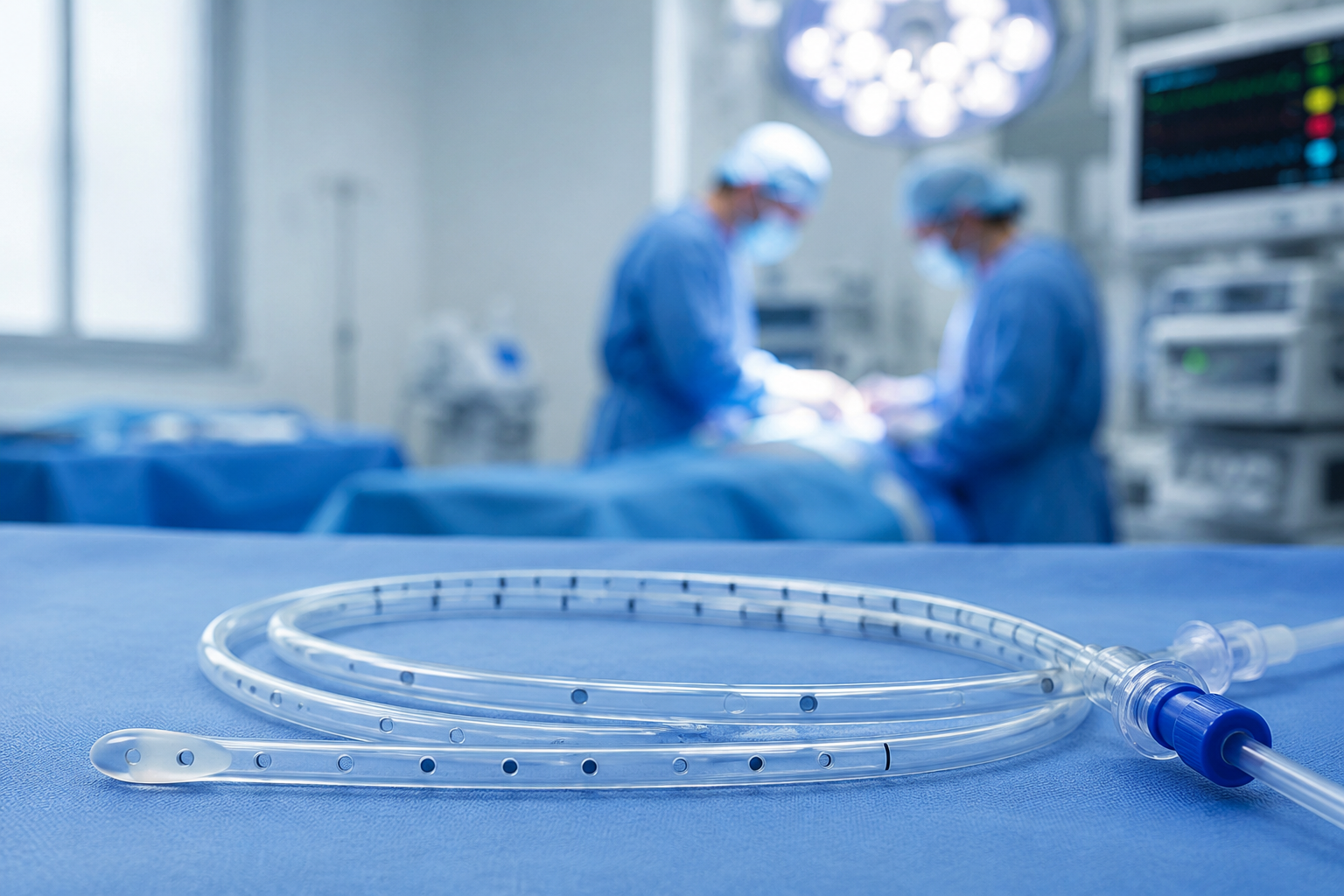
Improving Thoracic Drainage Outcomes Through Better Catheter Design
Thoracic drainage is a critical component of managing conditions such as pneumothorax, pleural effusion, hemothorax, and post-surgical chest complications. In these situations, effective drainage is essential to restoring normal lung function, relieving respiratory distress, and preventing further complications.
At the center of successful thoracic care lies a device that is often underestimated in its importance, the chest drainage catheter. While the primary purpose of these catheters is straightforward, their design significantly influences procedural efficiency, patient comfort, drainage effectiveness, and overall clinical outcomes. As healthcare increasingly prioritizes patient-centered and precision-driven care, modern thoracic drainage devices are evolving through smarter engineering, improved materials, and usability-focused innovation.
The Critical Role of Chest Drainage Catheters
Chest drainage catheters are designed to remove air, blood, or fluid from the pleural cavity, helping the lungs re-expand properly. These devices are commonly used in:
- Emergency thoracic care
- Intensive care units
- Pulmonary medicine
- Trauma management
- Post-operative recovery following thoracic surgery
Successful drainage depends not only on clinical technique but also on the catheter’s ability to maintain uninterrupted and efficient fluid evacuation. Poor catheter performance can contribute to:
- Inadequate drainage
- Catheter occlusion
- Increased patient discomfort
- Prolonged hospital stays
- Higher risk of complications and repeat interventions
This makes catheter design a crucial factor in thoracic care outcomes.
Why Catheter Design Matters in Thoracic Care
Thoracic drainage procedures often involve vulnerable patients experiencing pain, respiratory difficulty, or post-surgical recovery. In such cases, catheter functionality and patient comfort must work together. Modern chest drainage catheters are engineered to address several clinical challenges simultaneously:
- Maintaining consistent drainage flow
- Minimizing tissue trauma during insertion
- Preventing kinking or obstruction
- Enhancing procedural control for clinicians
Design improvements help ensure reliable drainage while reducing stress on both patients and healthcare providers.
Flow Efficiency and Drainage Performance
One of the most important aspects of chest drainage catheter design is maintaining effective fluid and air evacuation. Factors influencing drainage efficiency include:
- Internal lumen diameter
- Side-hole configuration
- Catheter flexibility
- Resistance to collapse under pressure
Advanced catheter designs optimize these elements to support smooth and uninterrupted drainage. For example, poorly positioned or inadequately designed side holes may become blocked by tissue or clots, reducing drainage effectiveness. Modern catheters use carefully engineered drainage patterns to improve fluid evacuation while minimizing obstruction risk. This directly contributes to faster recovery and reduced complication rates.
Reducing Patient Trauma Through Better Engineering
Patient comfort is becoming an increasingly important consideration in thoracic care procedures. Traditional rigid drainage devices may increase discomfort, tissue irritation, and mobility limitations during recovery. Modern chest drainage catheters are designed using:
- Soft, biocompatible materials
- Flexible catheter bodies
- Atraumatic insertion tips
These features help reduce insertion trauma and improve tolerance during extended catheter placement. Flexible catheters also adapt more naturally to patient movement, reducing irritation and lowering the likelihood of accidental displacement. Manufacturers such as Medivation Bio focus on developing thoracic drainage devices that combine drainage efficiency with patient-centered engineering, supporting safer and more comfortable thoracic care.
Kink Resistance and Structural Reliability
Kinking remains one of the most common challenges in pleural drainage systems. A kinked catheter can obstruct flow, delay treatment, and increase the need for repositioning or replacement procedures. To address this issue, modern chest drainage catheters incorporate:
- Reinforced wall structures
- Optimized flexibility-to-strength balance
- Anti-kink material technology
These design advancements ensure that the catheter maintains lumen integrity even when positioned around anatomical curves or during patient movement. Reliable catheter performance is particularly important in intensive care and emergency settings where uninterrupted drainage is critical.
Enhancing Usability for Clinicians
Usability plays a major role in procedural success. Thoracic drainage devices must allow clinicians to work efficiently, accurately, and confidently under demanding conditions. Important usability-focused design features include:
- Clear depth markings for precise placement
- Smooth insertion characteristics
- Secure connector systems
- Transparent materials for visual monitoring
These features improve procedural control and reduce the likelihood of technical complications during insertion and ongoing management. In high-pressure clinical environments, intuitive device handling can significantly enhance workflow efficiency and clinician confidence.
Infection Prevention and Sterility
As with all invasive devices, infection prevention is a critical priority in chest drainage procedures. Catheter-related infections can prolong hospitalization and compromise patient recovery. Modern thoracic care devices are manufactured under strict sterility and quality-control standards to minimize contamination risks. Design improvements such as:
- Smooth catheter surfaces
- Secure closed-system compatibility
- Biocompatible materials
help reduce bacterial adherence and support safer long-term use.
Advancing Thoracic Care Through Innovation
The future of thoracic drainage lies in continued innovation focused on improving both clinical outcomes and patient experience. Emerging trends in chest drainage catheter technology include:
- Smaller-profile catheters with improved flow performance
- Enhanced material biocompatibility
- More ergonomic insertion systems
- Integrated safety-focused features
These advancements reflect the growing shift toward minimally invasive, patient-centered healthcare solutions.
Better Design, Better Outcomes
In thoracic care, successful drainage is about more than simply removing air or fluid, it is about doing so safely, efficiently, and comfortably. Modern chest drainage catheters are evolving into highly engineered devices that support better clinical performance while improving usability for healthcare providers and recovery experiences for patients. By combining advanced materials, precision engineering, and thoughtful design, today’s thoracic drainage systems are helping redefine standards in pleural care.
