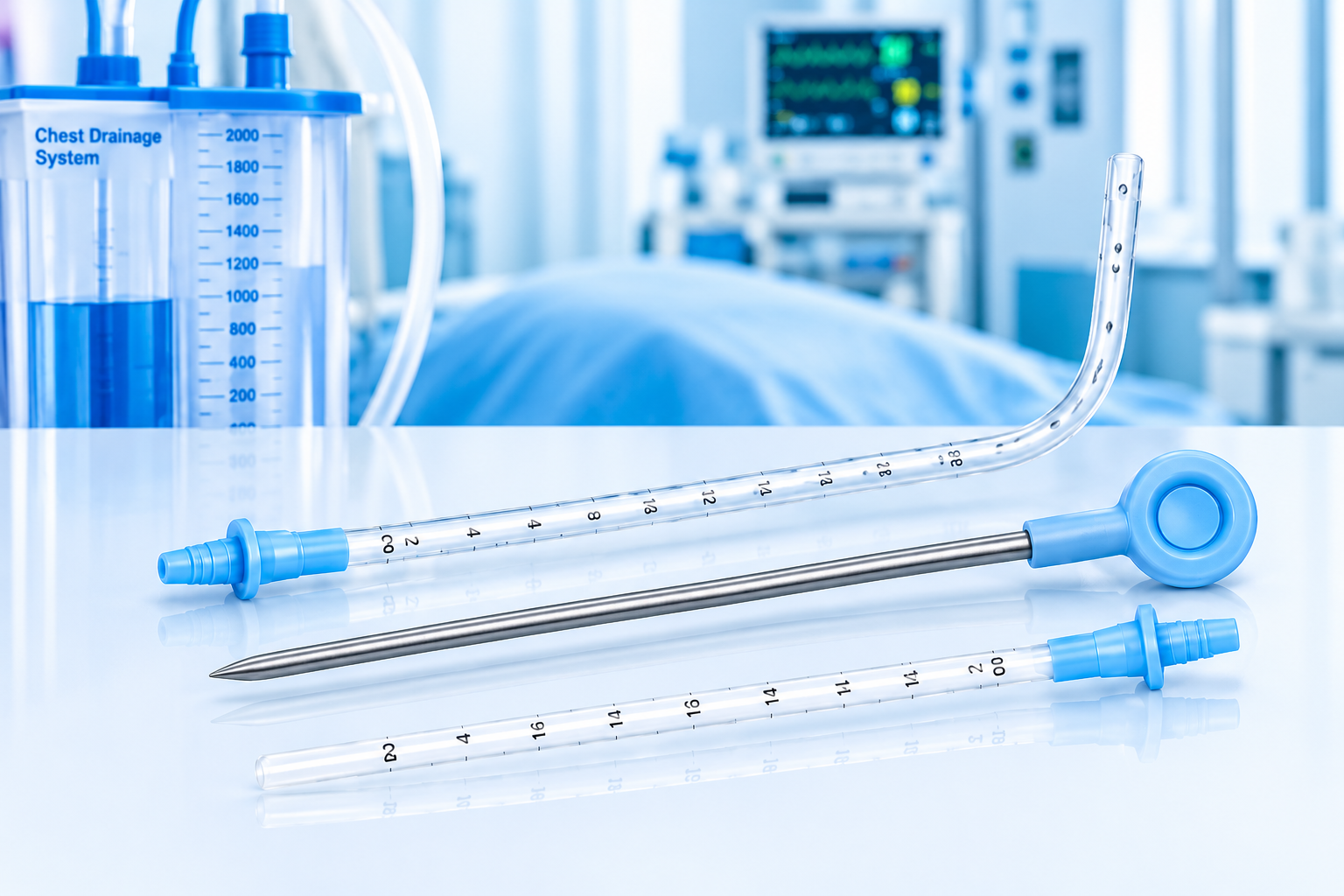
Why Uninterrupted Drainage Matters in Thoracic Care
Chest drainage is used across thoracic surgery, trauma care, pulmonology, emergency medicine, and critical care to remove unwanted air or fluid from the pleural space. Placing the catheter, however, is only one stage of successful drainage therapy. Once positioned, the catheter must remain functional. This makes catheter patency, the ability of the drainage pathway to remain open and allow effective evacuation, an important consideration throughout thoracic care.
Why Patency Matters
A chest drainage catheter is intended to create a dependable pathway for air, blood, or pleural fluid to leave the thoracic cavity. If that pathway becomes restricted, drainage performance may decline. Depending on the patient's condition, ineffective drainage can interfere with clinical management and may require assessment or intervention. The key principle is straightforward: Successful placement establishes drainage. Maintaining patency helps sustain it.
This is why ongoing monitoring is an important part of chest drainage management.
What Can Interfere With Drainage?
Reduced drainage does not automatically mean that the catheter itself has failed. Several factors may contribute to a catheter that appears to be draining poorly, including:
- Kinking of the tubing
- Catheter obstruction
- Fibrin or clot formation
- Changes in catheter position
- Mechanical problems within the drainage pathway
- Loculated pleural fluid
- Reduction in the amount of fluid remaining
Published clinical guidance on indwelling pleural catheters notes that persistent effusion with poor drainage may be associated with symptomatic loculation or catheter obstruction, while mechanical malfunction or dislodgement should also be considered. For this reason, a change in drainage should be clinically assessed rather than interpreted from volume alone.
Lumen Design and Drainage Performance
The internal lumen forms the pathway through which fluid or air travels. Its dimensions and ability to maintain shape influence drainage characteristics. Catheter engineering therefore needs to balance several requirements. The device must be flexible enough to function within the body while maintaining sufficient structural stability to resist collapse or unwanted deformation. This balance becomes especially important when drainage involves thicker fluid or blood, where resistance to flow may be greater.
Side Holes Have a Functional Purpose
Drainage catheters often incorporate openings near the distal end to provide multiple pathways for fluid entry. Their position, size, and distribution can influence how efficiently material enters the catheter. If openings become obstructed by tissue, fibrin, or clot, drainage can become less effective even when the catheter remains correctly positioned. This is one reason drainage catheter performance should be viewed as a system rather than simply as a hollow tube. The lumen, distal openings, catheter material, positioning, connections, and external drainage system all work together.
Kink Resistance in Real Clinical Environments
Patients do not remain perfectly still during treatment. They reposition in bed, sit upright, undergo imaging, participate in respiratory care, and may begin mobilizing during recovery. A drainage catheter must therefore tolerate movement without easily compromising its internal pathway. A kink or sharp bend can restrict drainage. Thoughtful catheter construction aims to combine flexibility with sufficient resistance to deformation, helping maintain a dependable drainage pathway during normal patient movement.
Monitoring the Drainage System
Healthcare professionals monitor chest drainage for more than the quantity of fluid collected. Depending on the clinical situation and drainage system, assessment may include:
- Drainage amount and appearance
- Changes in expected output
- Tubing position
- Visible kinks or compression
- Integrity of connections
- Catheter fixation
- Patient symptoms
- Clinical evidence of continuing pleural air or fluid
An unexpected reduction in output should be interpreted in the context of the patient's overall clinical condition. A reduction may indicate improvement, but it may also warrant evaluation for obstruction or another drainage problem.
Why Device Design and Clinical Practice Must Work Together
No catheter design can replace correct insertion, positioning, fixation, monitoring, or clinical decision-making. Similarly, excellent clinical technique benefits from a device engineered for dependable performance. This relationship between product engineering and clinical practice is central to modern medical consumables. For chest drainage catheters, characteristics such as lumen consistency, flexibility, kink resistance, drainage-hole configuration, secure connectivity, and material performance can all contribute to practical usability. Within Medivation Bio’s thoracic drainage portfolio, these considerations reflect a broader objective: supporting healthcare professionals with devices designed around the realities of thoracic care rather than focusing on drainage capacity alone.
Supporting the Patient Beyond Catheter Placement
Maintaining effective drainage also supports the wider treatment journey. Thoracic patients may require repeated assessment, imaging, respiratory support, mobilization, and eventually catheter removal. A drainage system that functions predictably allows clinicians to monitor progress more confidently and make informed decisions as the patient's condition evolves. This is especially important because thoracic drainage is not a single procedural moment, it may continue over an extended period of recovery.
From Placement Success to Therapy Success
Medical devices are often evaluated at the moment they are used. Was the catheter inserted? Was the procedure completed? But the more meaningful question is whether the device continues to perform throughout its intended use. This shifts the conversation from successful catheter placement toward successful drainage therapy. And catheter patency sits at the center of that distinction.
Conclusion
Effective thoracic drainage depends on more than placing a catheter in the correct location. The drainage pathway must remain functional as the patient moves through treatment and recovery. Understanding catheter patency, recognizing possible causes of reduced drainage, monitoring the system carefully, and using thoughtfully engineered devices can all contribute to more dependable thoracic care. As medical technology evolves, the focus should not simply be on getting a device into place. It should be on ensuring that the device continues to do its job when the patient depends on it most.
