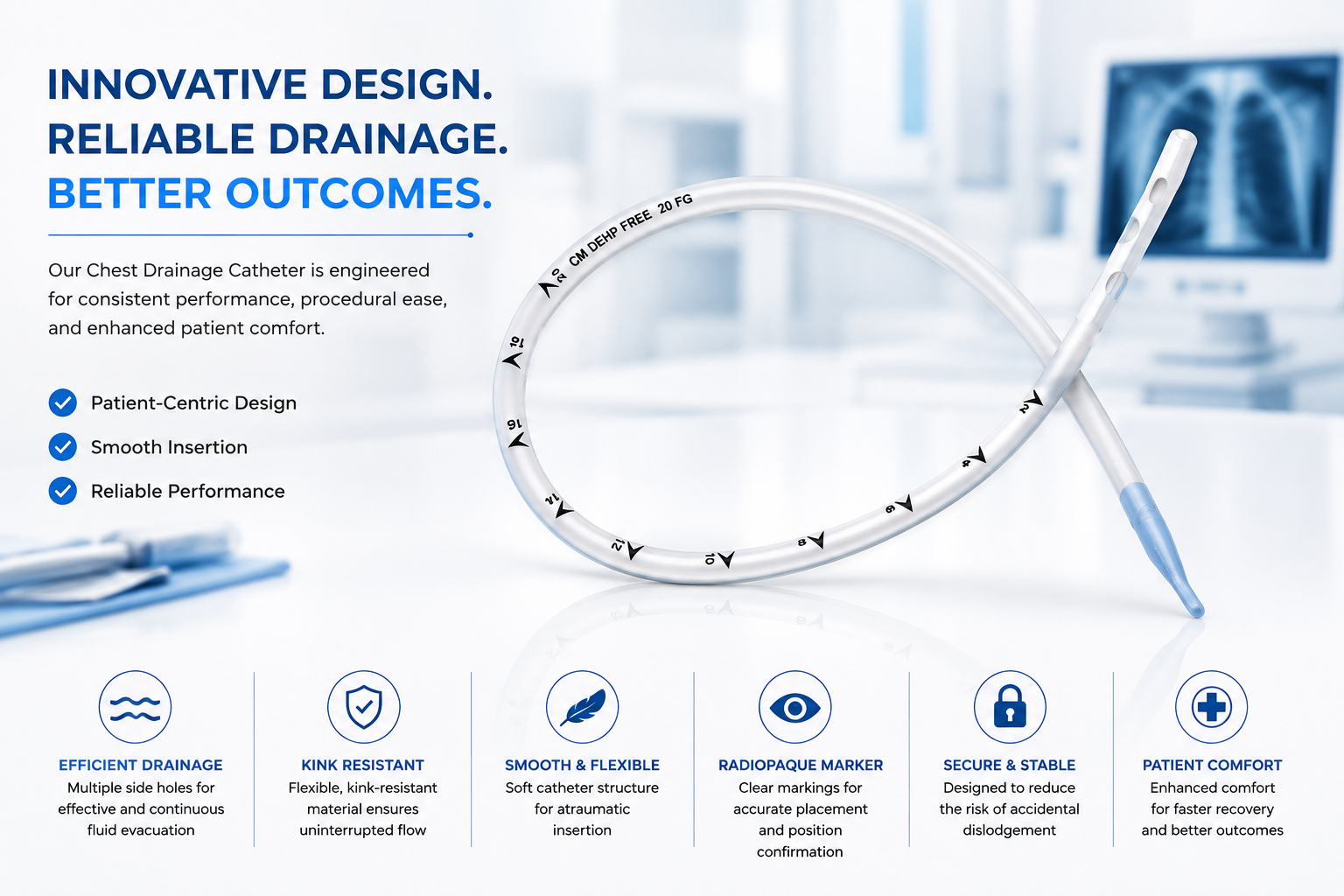
How Advanced Chest Drainage Catheter Design Is Improving Thoracic Care
Thoracic drainage is a critical component of patient management in conditions such as pneumothorax, pleural effusion, hemothorax, empyema, and post-operative chest surgeries. While the procedure itself is well established, ongoing advancements in chest drainage catheter design are transforming how clinicians approach thoracic care; making treatment safer, more efficient, and increasingly patient-centric.
Today's healthcare environment demands more than clinical effectiveness. It calls for medical devices that simplify procedures, minimize patient discomfort, reduce complications, and support faster recovery. As a result, manufacturers are reimagining chest drainage catheters through innovative engineering, advanced materials, and user-focused design. These innovations are helping healthcare professionals deliver better outcomes while improving the overall patient experience.
Why Patient-Centric Design Matters in Thoracic Drainage
Chest drainage procedures are often performed in emergency departments, intensive care units, operating rooms, and trauma settings where timely intervention is essential. However, beyond achieving effective drainage, clinicians must also consider factors such as procedural ease, patient comfort, mobility, and post-procedural recovery. Traditional drainage systems primarily focused on restoring lung function by evacuating air or fluid from the pleural cavity. Modern thoracic care, however, emphasizes a more comprehensive approach, one that balances clinical performance with patient well-being. Patient-centric device design ensures that chest drainage catheters not only perform reliably but also contribute to a smoother treatment journey.
The Evolution of Chest Drainage Catheters
Chest drainage catheters have evolved significantly over the years. Earlier designs often prioritized drainage capacity, sometimes at the expense of flexibility and ease of insertion. Today's catheters are engineered to address multiple clinical challenges simultaneously. Modern innovations include:
- Flexible catheter construction for easier navigation
- Smooth insertion profiles to support minimally invasive procedures
- Optimized drainage lumen for consistent fluid evacuation
- Kink-resistant designs that maintain uninterrupted flow
- Radiopaque markers for improved placement confirmation
- Secure fixation features that reduce the risk of accidental dislodgement
These improvements enable clinicians to perform thoracic drainage with greater confidence while enhancing procedural efficiency.
Supporting Consistent and Reliable Drainage
The primary objective of any chest drainage catheter is to maintain effective evacuation of air or fluid from the pleural space. Inconsistent drainage can lead to complications such as incomplete lung expansion, prolonged hospitalization, or the need for additional interventions. Advanced catheter engineering helps ensure:
- Consistent drainage performance
- Reduced risk of lumen blockage
- Stable catheter positioning
- Continuous fluid evacuation
- Reliable performance throughout therapy
By maintaining uninterrupted drainage, clinicians can better monitor patient progress and support successful recovery.
Enhancing Procedural Efficiency for Healthcare Professionals
Patient-centered innovation also benefits clinicians. Thoracic drainage procedures often require precision, particularly in high-pressure clinical environments where time is critical. Well-designed chest drainage catheters help simplify the procedure through features that improve handling and usability. These include:
- Easy-to-handle catheter construction
- Improved insertion control
- Better compatibility with drainage systems
- Secure connector interfaces
- Clear depth markings for accurate placement
By reducing procedural complexity, healthcare professionals can perform interventions more efficiently while minimizing the potential for technical challenges.
Material Innovation Is Driving Better Outcomes
The choice of material has become a defining factor in modern chest drainage catheter performance. Advanced medical-grade polymers provide several advantages over traditional materials, including:
- Greater flexibility
- Enhanced biocompatibility
- Improved durability
- Resistance to kinking
- Better patient tolerance during extended drainage
Material innovation allows catheters to adapt more naturally to patient anatomy while maintaining structural integrity throughout treatment. This contributes to both clinical reliability and improved patient comfort.
Reducing Complications Through Better Device Design
Complications associated with thoracic drainage can prolong treatment and affect patient recovery. Innovative catheter design helps reduce risks by addressing common clinical concerns such as:
- Catheter occlusion
- Accidental dislodgement
- Flow interruption
- Tissue trauma during insertion
- Inconsistent drainage performance
Engineering solutions that prioritize stability, precision, and ease of use allow clinicians to manage thoracic conditions more effectively while reducing unnecessary interventions.
Supporting Recovery Beyond the Procedure
Successful thoracic care extends beyond catheter placement. Once drainage is established, maintaining patient mobility, monitoring recovery, and minimizing hospital stay become important clinical priorities. Modern chest drainage catheters are increasingly designed to support these goals by enabling dependable performance throughout the treatment period. Reliable drainage systems help clinicians:
- Monitor drainage progression more accurately
- Assess treatment effectiveness
- Facilitate timely catheter removal
- Support enhanced recovery pathways
As healthcare continues to adopt patient-centered care models, medical consumables play a larger role in improving both clinical outcomes and the overall treatment experience.
The Future of Thoracic Drainage Technology
Innovation in thoracic drainage continues to evolve alongside advances in minimally invasive medicine and critical care. Future developments are expected to focus on:
- Smarter catheter materials
- Improved flow optimization
- Enhanced imaging compatibility
- Better infection prevention strategies
- Greater integration with modern drainage systems
The objective remains clear: creating devices that improve procedural efficiency while delivering better outcomes for patients. Advances in thoracic care are increasingly shaped by devices that prioritize not only clinical effectiveness but also the overall patient experience. Improvements in catheter flexibility, drainage efficiency, and ease of placement have helped make chest drainage procedures more predictable and less invasive.
Recognizing these evolving clinical expectations, manufacturers like Medivation Bio develop chest drainage catheters with a focus on supporting procedural confidence while contributing to better patient-centered care.
Conclusion
As thoracic care advances, the role of patient-centric chest drainage catheter design has become increasingly important. Modern catheters are no longer simply drainage devices; they are carefully engineered solutions that support procedural efficiency, reliable clinical performance, and improved patient outcomes.
Through innovations in materials, design, and usability, chest drainage catheters are helping clinicians deliver safer, more effective thoracic care while enhancing the patient experience. As healthcare continues to evolve, investing in advanced chest drainage solutions will remain essential for delivering high-quality, patient-focused care.
