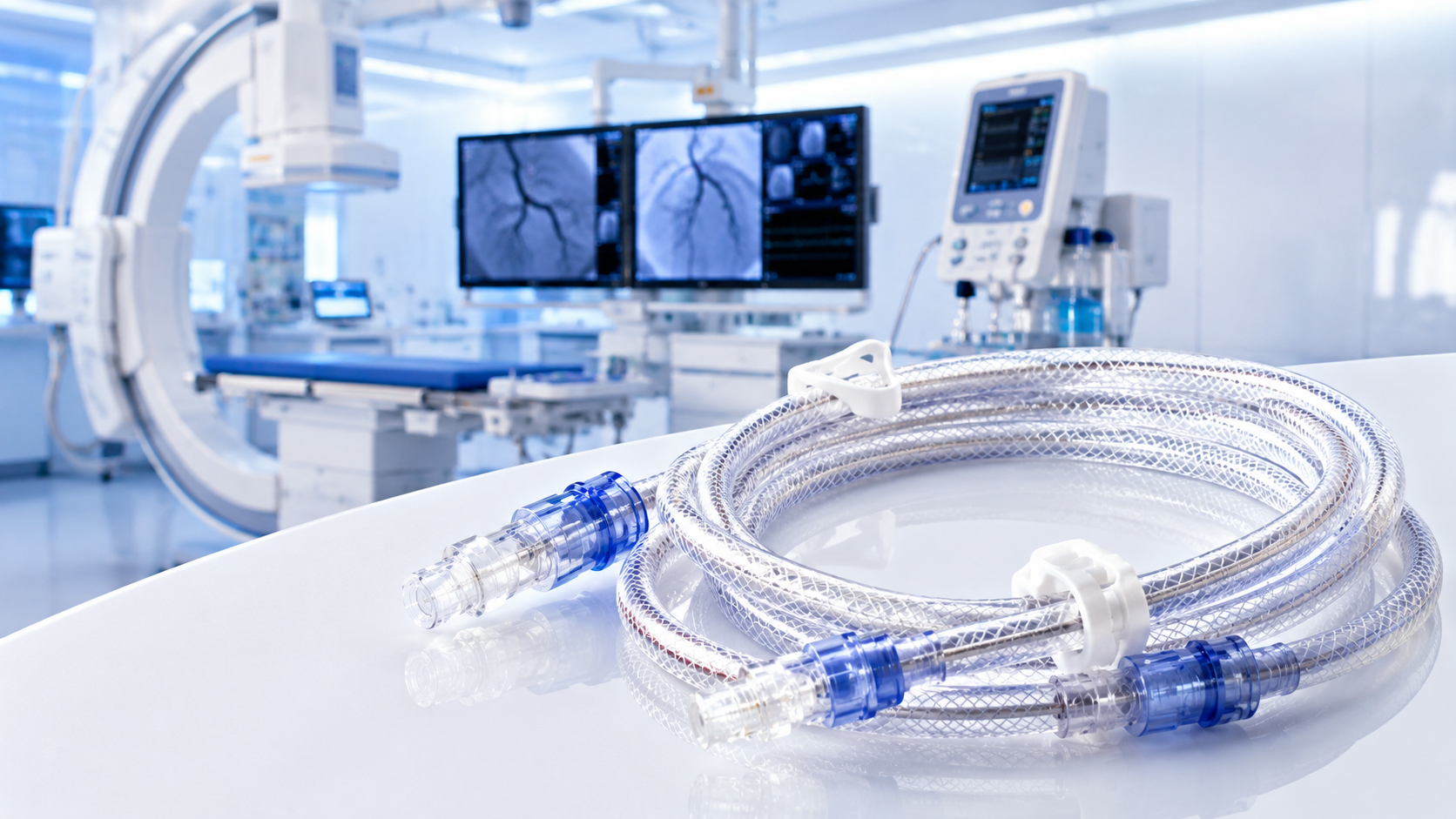
Why Pressure Resistance Matters in Interventional Procedures
Modern interventional procedures rely heavily on precision, speed, and device reliability. Whether in interventional cardiology, radiology, or critical care, clinicians routinely work with systems that deliver fluids, contrast media, or inflation pressure under highly demanding conditions. In these environments, one factor becomes critically important: pressure resistance.
High-pressure tubing and related delivery systems are designed to operate safely under extreme force while maintaining stable flow and structural integrity. Even minor failures in pressure performance can compromise procedural accuracy, delay treatment, and increase patient risk. As minimally invasive interventions continue to advance, the role of pressure-resistant medical tubing is becoming increasingly central to procedural safety and clinical success.
Understanding High-Pressure Systems in Healthcare
Interventional procedures often require fluids or devices to be delivered at controlled high pressures. Common applications include:
- Contrast media injection during imaging procedures
- Balloon angioplasty and stent deployment
- Hemodynamic monitoring systems
- Infusion systems in critical care environments
These procedures place significant mechanical stress on tubing systems. Devices must withstand rapid pressure changes without leaking, rupturing, or losing flow consistency. This is where specialized high-pressure tubing becomes essential.
Why Pressure Resistance Is Critical
Pressure resistance refers to the ability of tubing and associated components to maintain structural stability under elevated pressure conditions. In interventional settings, inadequate pressure resistance can lead to:
- Tubing rupture or leakage
- Inconsistent contrast delivery
- Air embolism risk
- Procedural delays or interruptions
- Increased patient safety concerns
Because many interventional procedures involve time-sensitive decision-making, device reliability is non-negotiable. High-pressure tubing must consistently perform under demanding conditions while supporting precise fluid delivery throughout the procedure.
The Link Between Pressure Stability and Procedural Accuracy
In procedures such as angiography or CT contrast imaging, flow precision directly affects image quality and diagnostic accuracy. If tubing expands excessively under pressure or experiences inconsistent flow resistance, clinicians may encounter:
- Uneven contrast distribution
- Delayed visualization
- Inaccurate imaging results
Similarly, in balloon angioplasty, pressure inconsistencies can affect device inflation control and procedural precision. Pressure-resistant tubing helps maintain stable internal flow dynamics, ensuring predictable delivery even under rapid pressure changes. This level of consistency is essential for achieving reliable clinical outcomes.
Engineering Challenges in High-Pressure Tubing Design
Designing tubing for interventional procedures requires balancing several critical performance factors:
- Strength
- Flexibility
- Kink resistance
- Flow consistency
- Biocompatibility
Tubing that is overly rigid may become difficult to handle, while excessively flexible materials may deform under pressure. Modern interventional cardiology devices use advanced polymers and reinforced construction techniques to achieve this balance. Key design considerations include:
- Reinforced multi-layer tubing walls
- Low-compliance materials to minimize expansion
- Smooth internal lumens for uninterrupted flow
- Secure connector compatibility to prevent leaks
These engineering features help ensure safe and stable performance during high-pressure use.
Preventing Leaks and Structural Failures
Leak prevention is one of the most important safety requirements in pressure tubing systems. Even small leaks can:
- Interrupt fluid delivery
- Compromise sterile environments
- Introduce air into the system
- Delay critical procedures
To address this, modern tubing systems undergo rigorous testing for:
- Burst pressure resistance
- Tensile strength
- Connector integrity
- Pressure cycling durability
Manufacturers such as Medivation Bio focus on developing high-pressure tubing systems designed to meet demanding clinical performance standards while supporting procedural reliability and patient safety.
The Importance of Flow Consistency
Pressure resistance alone is not enough, tubing must also maintain consistent flow under stress. In high-pressure systems, unstable flow can occur due to:
- Internal lumen deformation
- Material expansion
- Kinking or partial obstruction
Advanced tubing designs reduce these risks by incorporating:
- Kink-resistant structures
- Stable lumen geometry
- Reinforced pressure-bearing materials
These features help clinicians maintain procedural control and confidence throughout complex interventions.
Supporting Safety in Critical Procedures
Interventional procedures often occur in high-stakes clinical environments where speed and precision are essential. Equipment failure during these procedures can have serious consequences. Pressure-resistant tubing contributes to safer interventions by:
- Reducing device-related interruptions
- Supporting predictable performance
- Enhancing clinician confidence
- Minimizing procedural complications
Reliable tubing systems are especially important in emergency cardiovascular procedures where rapid intervention directly impacts patient outcomes.
Material Innovation and Manufacturing Precision
Advances in material science are driving the evolution of pressure tubing technologies. Modern high-pressure systems increasingly rely on:
- Advanced thermoplastic polymers
- Reinforced braided structures
- Improved biocompatibility coatings
- Precision extrusion manufacturing
These innovations allow tubing to withstand higher pressures while maintaining flexibility and handling efficiency.At the same time, automated manufacturing and quality-control systems help ensure consistency across every device produced. This level of precision is essential in critical care and interventional medicine where even minor inconsistencies can affect performance.
The Future of Pressure-Resistant Interventional Devices
As minimally invasive medicine continues to grow, demand for stronger, safer, and more reliable interventional devices will continue increasing. Future innovations may include:
- More compact tubing with higher pressure tolerance
- Enhanced connector safety systems
- Improved material sustainability
- Smarter pressure-monitoring integration
The focus will remain on delivering safer and more efficient procedural support while minimizing risks in complex clinical environments.
Strength, Stability, and Clinical Confidence
In interventional medicine, pressure resistance is far more than a technical specification, it is a core component of procedural safety and performance.
High-pressure tubing systems must deliver strength, stability, and consistent flow under some of the most demanding conditions in healthcare. Through advanced engineering and precision manufacturing, modern pressure tubing plays a vital role in supporting accurate interventions and protecting patient safety.
