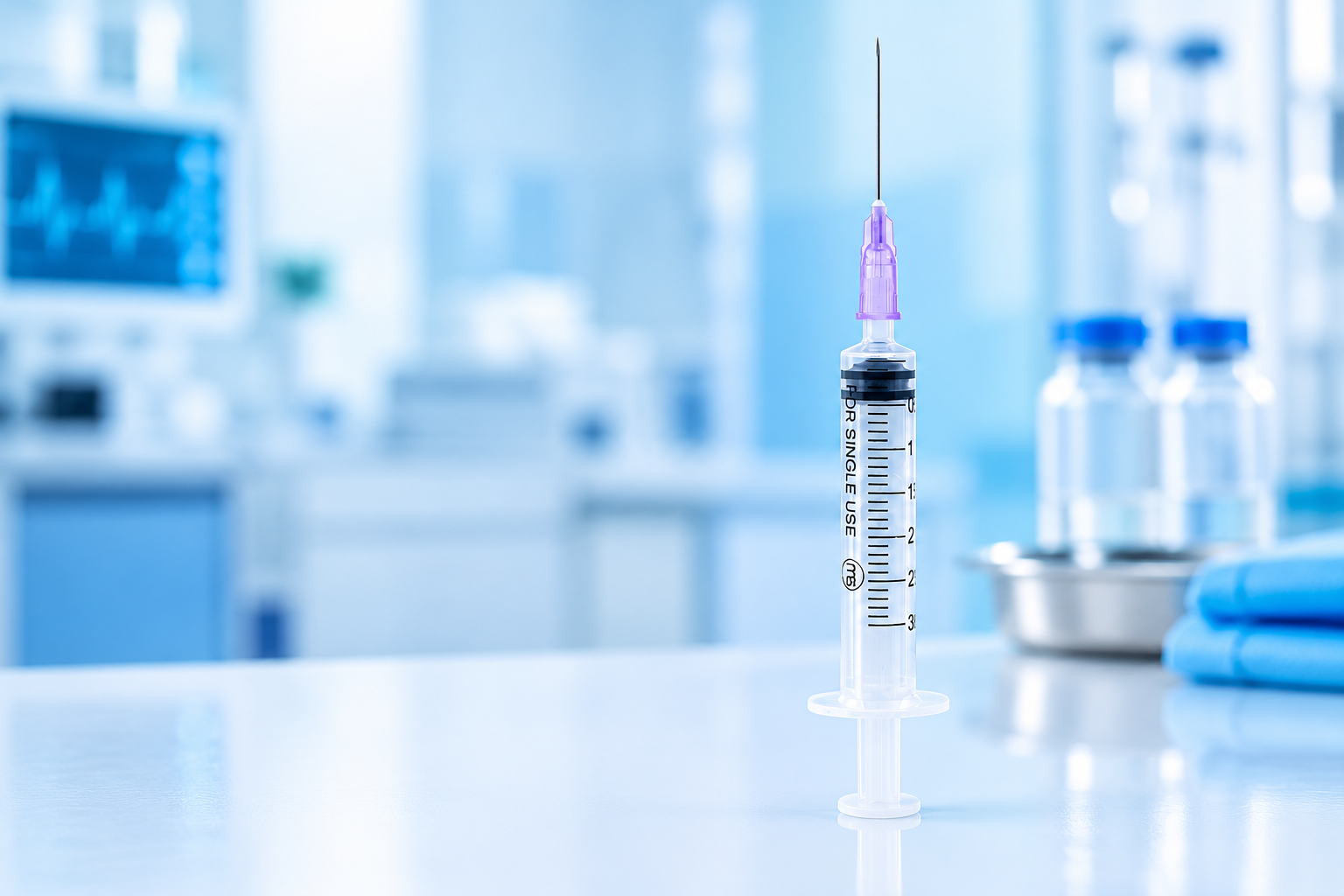
Syringe Dead Space: The Small Design Detail That Can Influence Medication Delivery
Hypodermic syringes are among the most familiar medical devices in healthcare. Their basic function appears simple: draw up a medication and deliver the required dose. Yet within this seemingly straightforward process lies a small engineering consideration that deserves greater attention, syringe dead space.
Dead space refers to the small internal volume where medication may remain after the plunger has been fully depressed. Although the amount may appear insignificant, understanding dead space is relevant when considering medication utilization, dose delivery, and efficiency across high-volume healthcare environments.
What Is Syringe Dead Space?
When a syringe is used, not every internal surface necessarily becomes completely free of fluid after injection. A small quantity of medication can remain within areas such as the syringe tip, needle hub, or connection between components. This residual volume is commonly described as dead space. The amount can vary depending on syringe and needle configuration. Published research has demonstrated that syringe dead-space volumes can differ between products, meaning both syringe and needle design should be considered when evaluating residual medication volume.
Why Can Such a Small Volume Matter?
For many routine injections, residual volume may have limited clinical significance. However, context matters. When small medication volumes, high-value drugs, or repeated injections are involved, residual medication can become more relevant. Consider the difference between looking at one injection and thousands of injections across a healthcare facility. A tiny amount of medication retained during each procedure can become a larger issue when multiplied across repeated use. This introduces three important considerations: Medication utilization, dose consistency, and resource efficiency.
The Relationship Between Design and Delivered Volume
A syringe is a precision delivery system. The barrel, plunger, tip, graduation markings, and needle connection all work together to enable medication preparation and administration. Dead-space performance is therefore not determined by a single component. Different connection designs and needle configurations can create different residual spaces. This is one reason why clinicians should use devices appropriate to the medication, dose volume, route of administration, and clinical protocol. The broader lesson is important: even apparently minor aspects of syringe geometry can influence how a device performs.
Why Low-Volume Doses Require Attention
When a medication dose is relatively large, a very small residual quantity may represent only a minor proportion of the prepared volume. With very small doses, however, the same residual volume can represent a greater proportion of the intended amount. This is particularly relevant to situations where dosing requires careful preparation and accurate measurement. Medication accuracy still depends on much more than syringe design. Clinician technique, medication concentration, preparation method, appropriate syringe capacity, and correct reading of graduations are all essential. Device engineering should therefore support, not replace, safe medication administration practices.
Dead Space and Medication Waste
Healthcare systems are increasingly examining how everyday processes affect resource utilization. Medication waste is part of that discussion. Residual medication within delivery devices may contribute to avoidable wastage, particularly when expensive or limited-supply medicines are involved. Research into syringe and needle dead space has highlighted both dosing and economic implications associated with residual volume. This makes thoughtful syringe selection relevant not only to individual procedures but also to broader healthcare efficiency.
Choosing the Right Syringe Capacity
Another important aspect of accurate medication preparation is choosing an appropriately sized syringe. Using a syringe with a capacity far greater than the volume being measured can make small-volume measurement more difficult. Clear and consistent graduations help clinicians identify the intended volume, while smooth plunger movement supports controlled administration. The best device choice therefore depends on the intended clinical application rather than assuming one syringe configuration is ideal for every injection.
Engineering Details Behind Everyday Reliability
The reliability of a hypodermic syringe depends on several interacting characteristics:
- Accurate and legible graduation markings
- Consistent barrel dimensions
- Smooth plunger movement
- Secure component connections
- Appropriate residual volume
- Material quality
- Sterility and packaging integrity
None of these features operates independently. Together, they determine whether an everyday medical device performs predictably when clinicians need it. This attention to manufacturing consistency is particularly important because syringes are used at enormous scale across hospitals, clinics, vaccination programs, laboratories, and other healthcare settings. Within Medivation Bio’s hypodermic syringe portfolio, the focus on precision engineering reflects the importance of these small but meaningful design considerations in routine medication delivery.
A Small Detail With a Wider Healthcare Impact
Medical innovation does not always require adding complexity. Sometimes, progress comes from understanding familiar devices more deeply and refining the details that influence everyday performance. Dead space is an excellent example. It may occupy only a tiny physical area within a syringe, but it raises larger questions around medication utilization, device selection, dosing practices, and healthcare efficiency.
Conclusion
Hypodermic syringes demonstrate how small engineering details can have broader implications for clinical practice. Understanding syringe dead space encourages healthcare professionals and procurement teams to look beyond basic device functionality and consider how design influences real-world use. In modern healthcare, precision is often built one small detail at a time. And when a device is used repeatedly across millions of clinical interactions, even the smallest details deserve careful attention.
